Page header image: Keet Geniza, Bi-Arts Festival, Glory Hole Gallery, 2017.
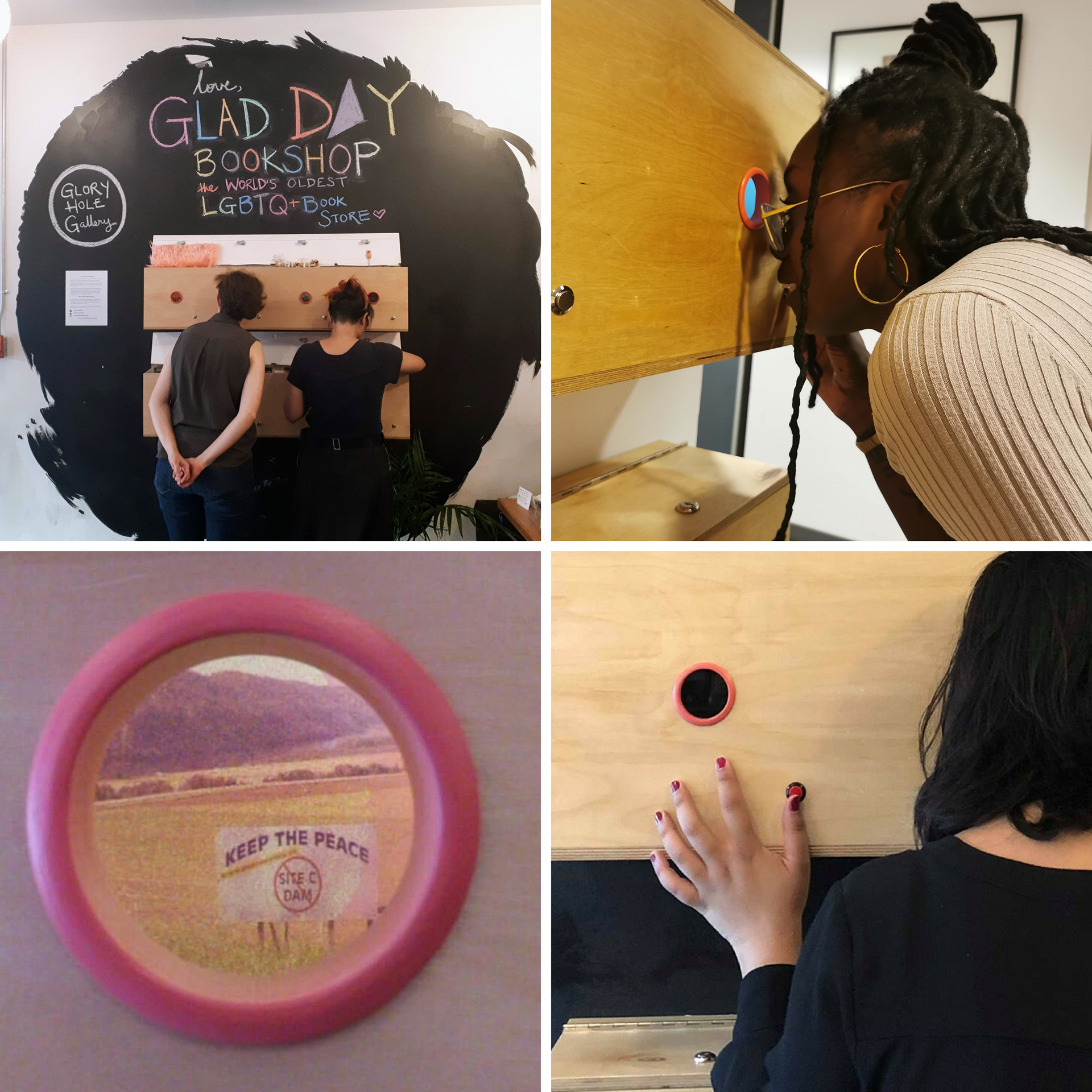
Images from the Top Left: Original Glory Hole Gallery installation at Glad Day Bookshop, 499 Church Street location in 2017, Artist Chason Yeboah looking into Glory Hole Gallery as a part of her exhibition of crochet dolls at the Glory Hole Gallery installation at the 519 Community Centre, 2024
Images from the Bottom Left: Installation shot of Finn Simard's work as a part of +Hole Pride Show 2017, and artist Mariam Magsi demonstrates Glory Hole Gallery at Glad Day Bookshop.
Photo Credit: Emily Peltier
History
Glory Hole Gallery is the world’s first—and only—2SLGBTQ+ micro‑gallery dedicated to celebrating the art and lived experiences of 2SLGBTQ+ people.
Originally conceived in 2017 by founders Emily Peltier and Sean MacPherson, the gallery was first installed at Glad Day Bookshop— the world’s oldest 2SLGBTQ+ bookstore—at its former location in Toronto on Church Street, and in The Village. The inaugural iteration featured eight 12 x 12 x 8.5‑inch box galleries designed and constructed by artist Max Lupo. Viewers encountered the artwork through a small eye hole at the front of each box, with LED lighting illuminating the pieces at the push of a button.
The name “Glory Hole Gallery” was intentionally chosen for its deep connection to Queer history and lived experience. It references the anonymous sexual encounters that were, for many, a necessary response to policing, homophobia, transphobia, racism, whorephobia, and attacks on sex workers’ rights. The glory hole stands as a symbol of Queer communities’ creative resistance to violence and censorship—both within society and within art and cultural spaces. The name remains an unwavering declaration of that resistance.
Over the years, Glory Hole Gallery has been programmed and operated by a collective of Toronto‑based artists and curators, including Karina Iskandarsjah and Eric Chengyang, and supported through partnerships with local organizations, galleries, businesses, and bathhouses. The project has also received generous funding from the Toronto Arts Council, Community One Foundation, and, most recently, the Bonham Centre at the University of Toronto.
Today, Glory Hole Gallery is programmed and curated by Emily Peltier and remains committed to radical, Queer sites of resistance and artistic innovation. The project continues as a nomadic micro‑museum, seeking partnerships and exhibition opportunities with artists and organizations around the world.
Interested in working with Glory Hole Gallery, or about the history? Send a message through the website!
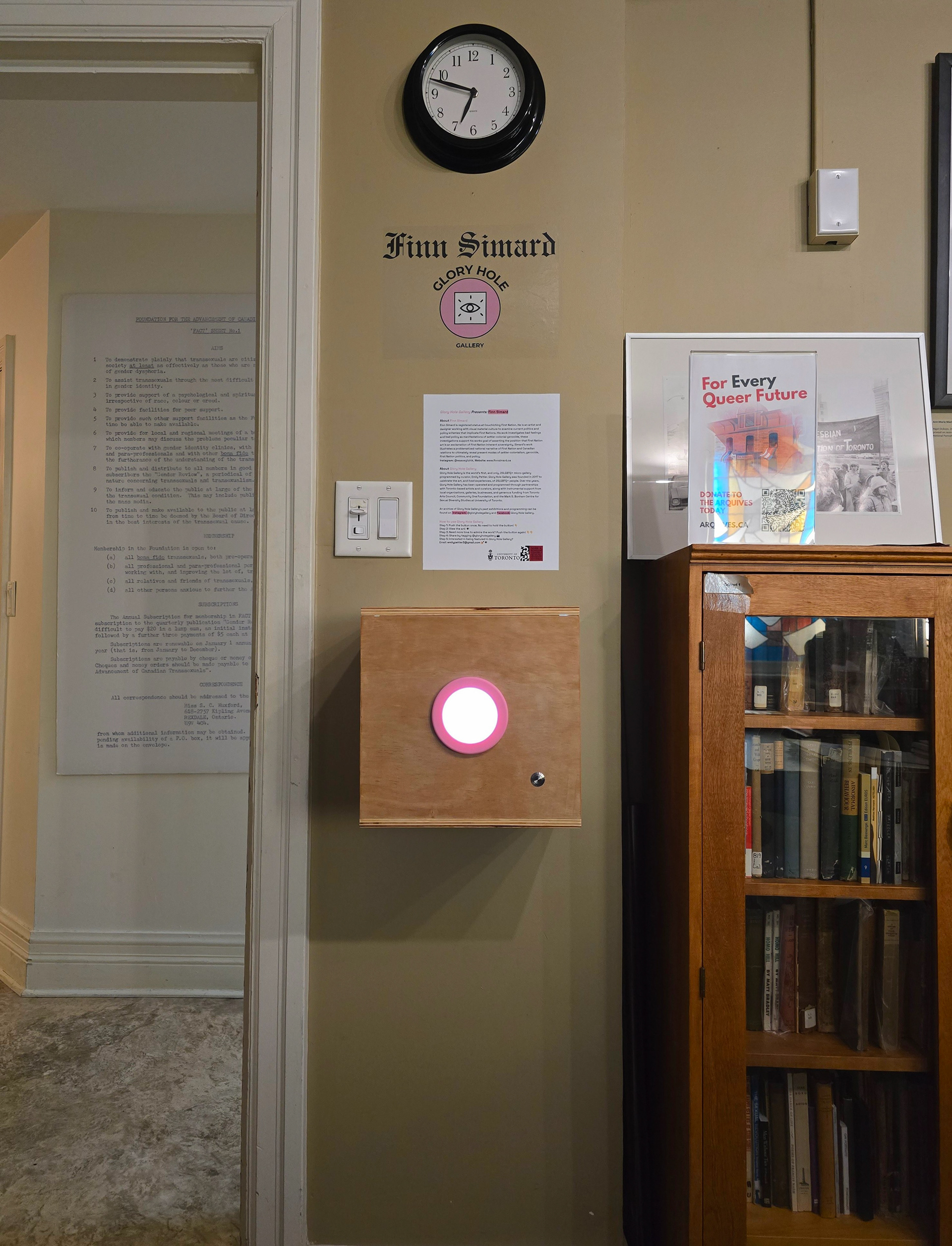
Glory Hole Gallery, 2026, installed in the Reading Room at historic ArQuives in Toronto, Ontario.
Photo Credit: Emily Peltier