✨✨✨
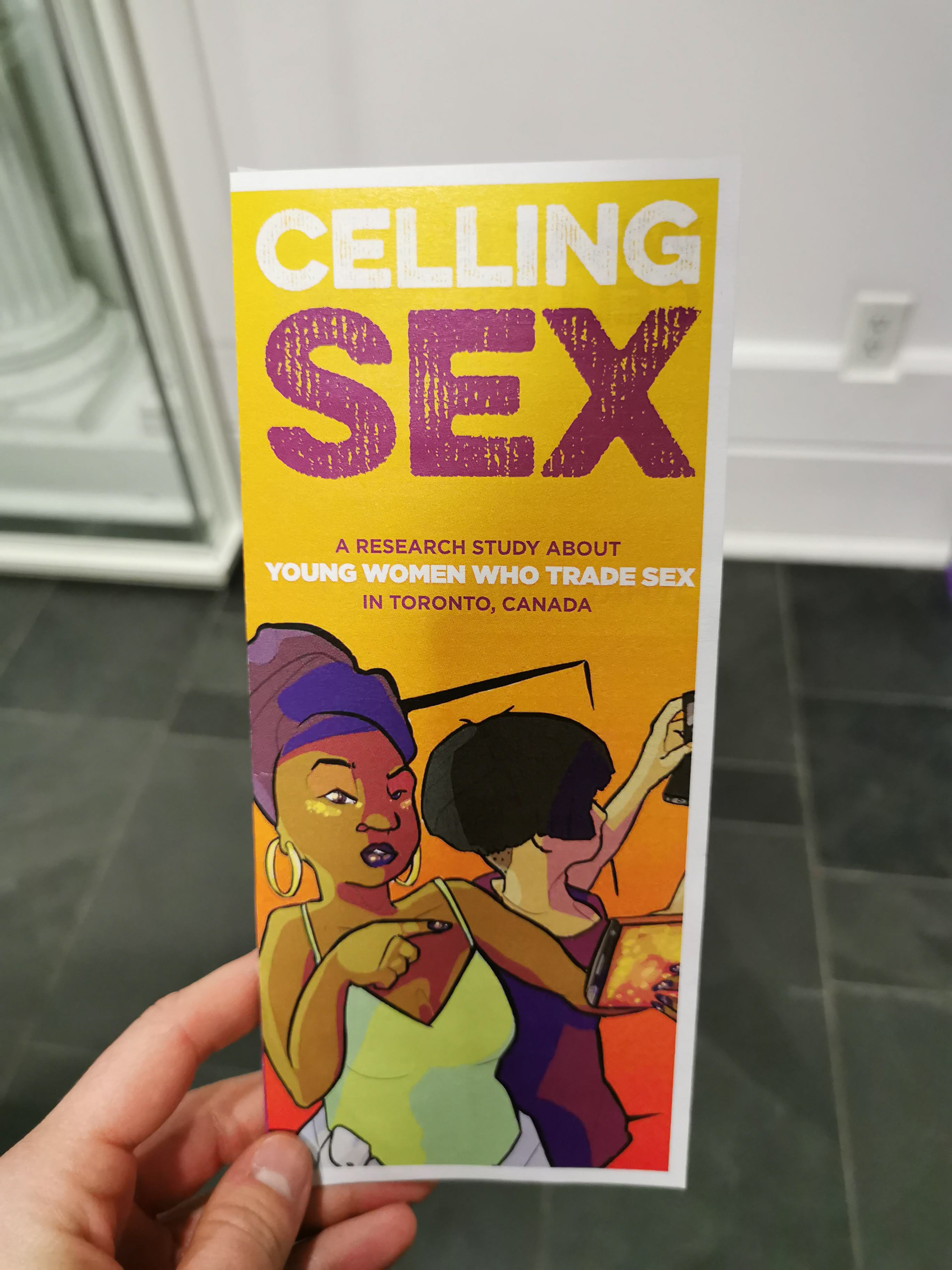
Celling Sex
A partnership between Glory Hole Gallery, and researchers listed below.
More information about the project can be found here: https://pubmed.ncbi.nlm.nih.gov/33819132/
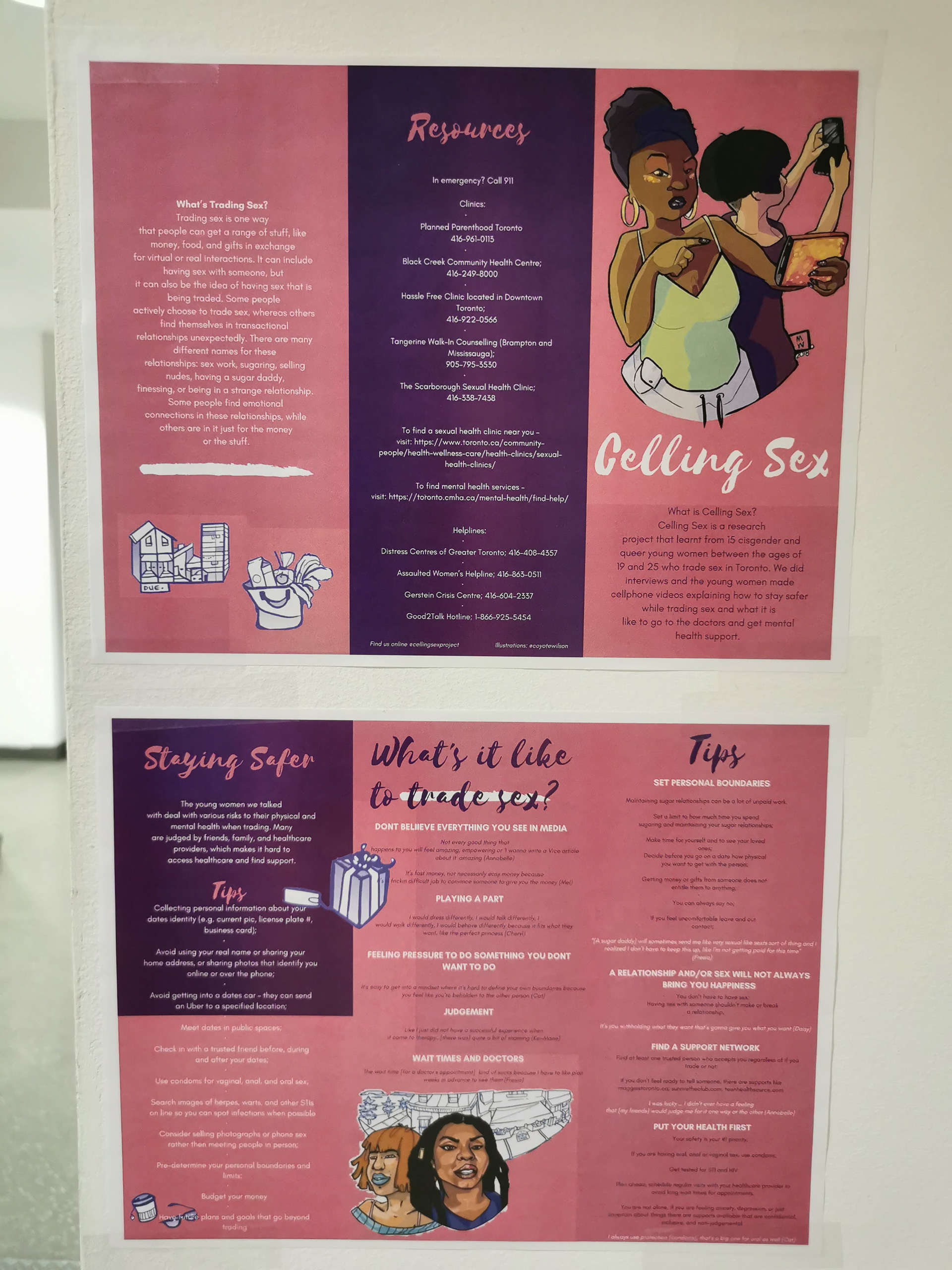
Celling Sex is a community-based participatory research project. Using cell-phone video-making and interviews, we learn from young women who trade sex about their harm reduction practices and access to health services. The study engaged fifteen straight and queer-identified women of diverse racial and ethnic backgrounds who were between the ages of 19 and 25.
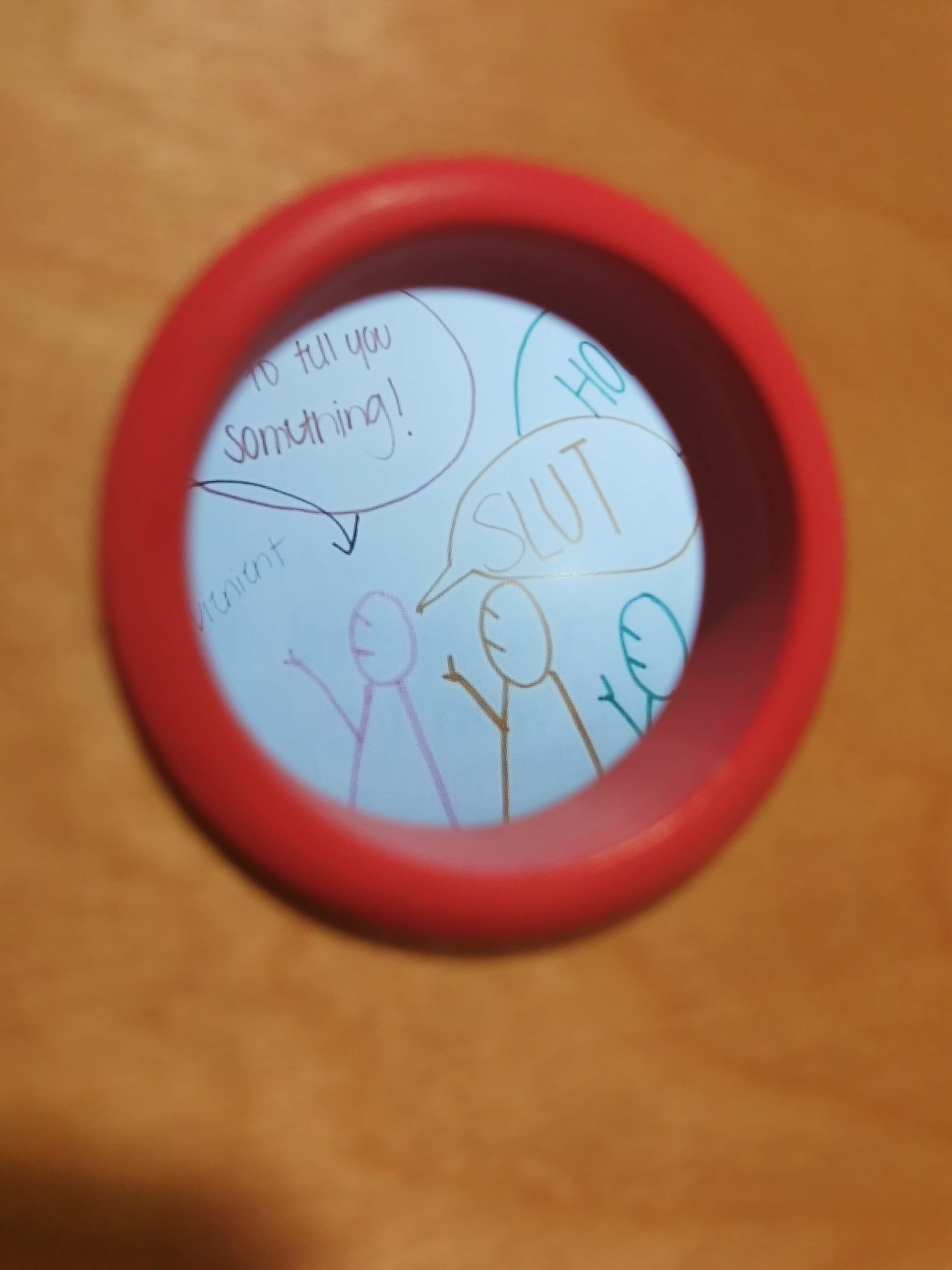
Transactional sex is one way that people can get a range of commodities, money, food, and gifts in exchange for virtual or real interactions with them and their bodies. Some people actively choose to trade sex, whereas others find themselves in transactional relationships unexpectedly. There are many different names for these relationships: sex work, sugaring, selling nudes, having a sugar daddy, or being in a strange relationship. Young women who trade sex are often invisible to healthcare providers, but they have unique health physical and mental health needs that require attention. They may also fear and experience stigma from friends, family, and healthcare providers, which can limit their access to healthcare.
Transactional sex is one way that people can get a range of commodities, money, food, and gifts in exchange for virtual or real interactions with them and their bodies. Some people actively choose to trade sex, whereas others find themselves in transactional relationships unexpectedly. There are many different names for these relationships: sex work, sugaring, selling nudes, having a sugar daddy, or being in a strange relationship. Young women who trade sex are often invisible to healthcare providers, but they have unique health physical and mental health needs that require attention. They may also fear and experience stigma from friends, family, and healthcare providers, which can limit their access to healthcare.
Bios:
Mesha Maloney is a visual artist and community worker hailing from Northern Ontario. She facilitates trainings for service providers, youth and law enforcement on domestic human trafficking. She has been featured as an impactful speaker across Canada leading discussions on human trafficking and mental health through her own lived experience.
Mesha Maloney is a visual artist and community worker hailing from Northern Ontario. She facilitates trainings for service providers, youth and law enforcement on domestic human trafficking. She has been featured as an impactful speaker across Canada leading discussions on human trafficking and mental health through her own lived experience.
Katie MacEntee has facilitated cellphilm workshops with communities in Canada, Mozambique, India, South Africa, and Vienna. She is the lead researcher on the Celling Sex project, has written widely on the method and is co-editor of the book, What’s a Cellphilm? Integrating mobile technology into research, teaching and activism (Sense).
Sarah Flicker’s background is in community development, public health, HIV and adolescent development. Sarah is active on a variety of community-based research teams focusing on sexual health with youth in Canada, and most recently, South Africa. She works across methodologies (qualitative, quantitative and arts-based) and seeks to partner with youth, students and allied practitioners on action research agendas.
Tess Kendrick is a second-year master’s student who is currently investigating the educative possibilities of disseminating the products of cellphilming, and participatory methods in community settings. She is interested in seeing how research project findings can be brought into everyday accessible spaces through art and relationship building.
Chrystal:
I've been called a sugar baby, goddess, goldfinger, and even other names that are similar in many ways. You can call me Cryssy. Trading sex or selling sex means that you are in a relationship that is transactional. Our study is so diverse, educational and unique - it has made it very eye-opening to me and I've learnt about a lot about other situations around me. I think the screenings and discussions are very productive and useful for sharing knowledge on this delicate topic.
I've been called a sugar baby, goddess, goldfinger, and even other names that are similar in many ways. You can call me Cryssy. Trading sex or selling sex means that you are in a relationship that is transactional. Our study is so diverse, educational and unique - it has made it very eye-opening to me and I've learnt about a lot about other situations around me. I think the screenings and discussions are very productive and useful for sharing knowledge on this delicate topic.
Lelo:
I’m a queer non binary femme person who really likes vegan gummy bears, yoga and reading books and also I happen to trade in sex! My favourite part of this study is the freedom to exist in this space of challenging societal understandings of transactional and non transactional sex.
I’m a queer non binary femme person who really likes vegan gummy bears, yoga and reading books and also I happen to trade in sex! My favourite part of this study is the freedom to exist in this space of challenging societal understandings of transactional and non transactional sex.
✨✨✨
The Screen Is The Mirror
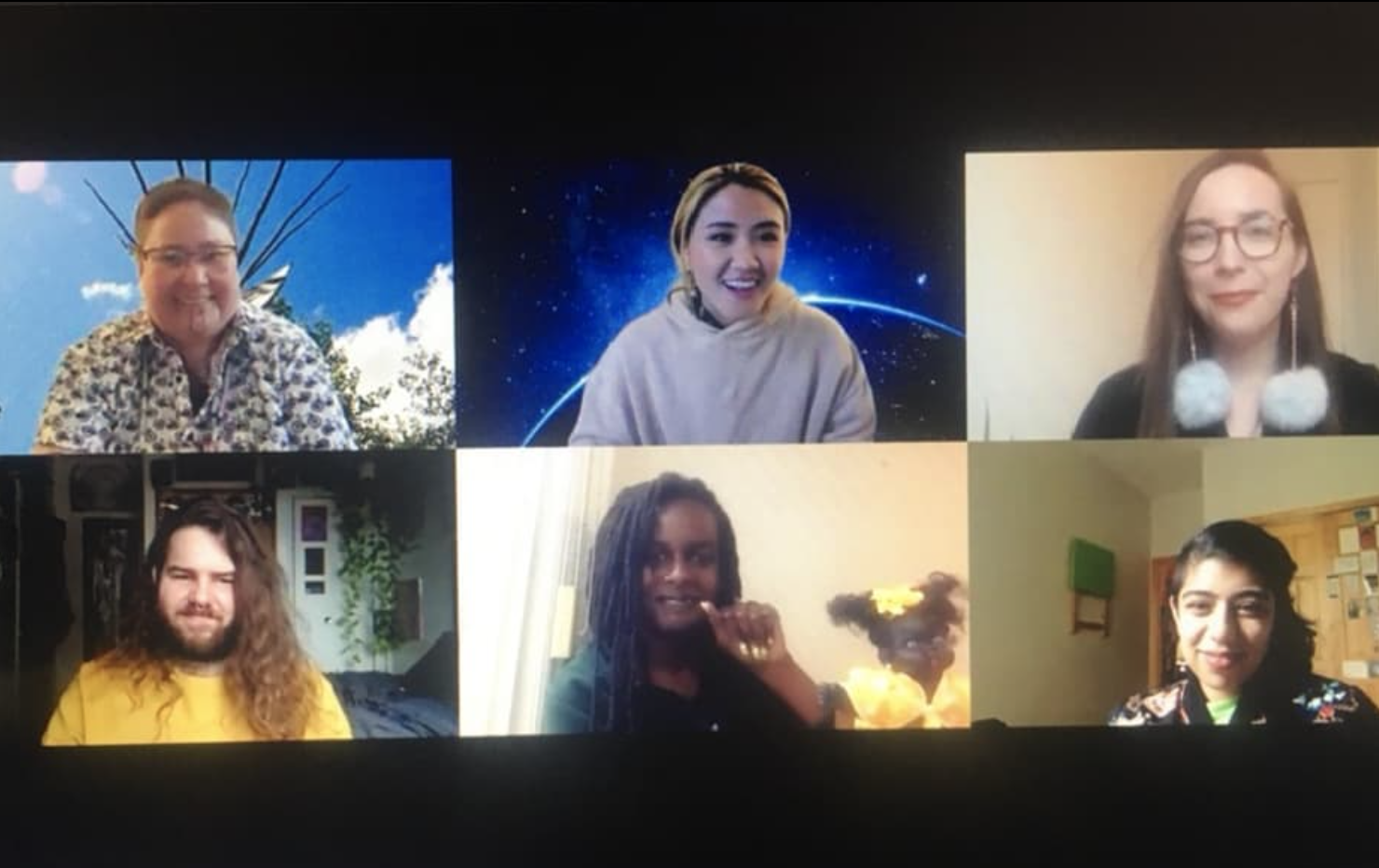
Theo Cuthand, Jeremy Saya, Umber Majeed, Kim Ninkuru
Curated/Moderated by Karina Iskandarsjah and Emily Peltier
Curated/Moderated by Karina Iskandarsjah and Emily Peltier
Screened in partnership online with BUMP TV
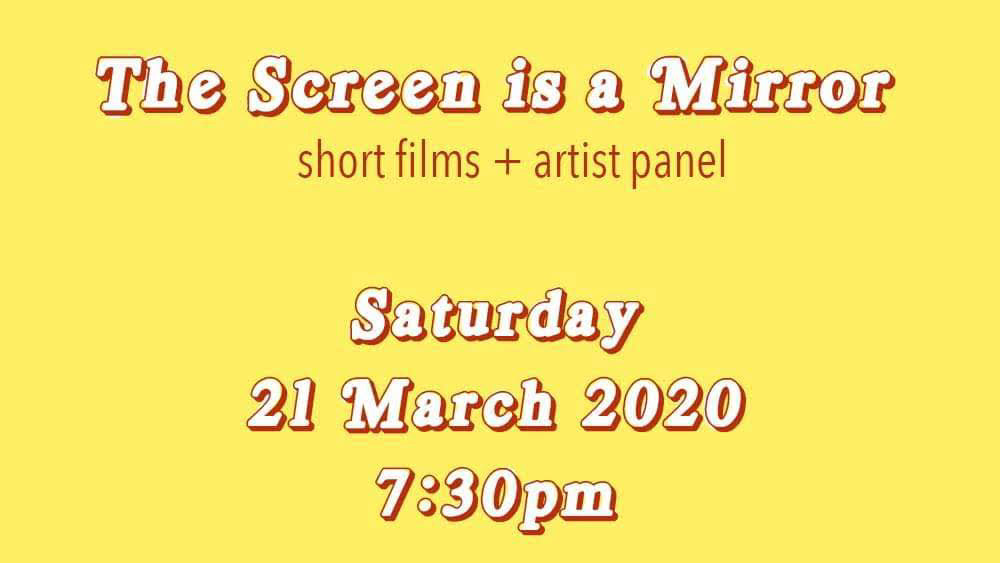
The Screen is a Mirror is a screening event and artist panel about intentional space-making and radical self-love; showcasing works that imagine methods in which queer and racialized identities can be fostered for survival, belonging and flourishing. Artists Theo Cuthand, Jeremy Saya, Umber Majeed and Kim Ninkuru experiment with self-portraiture, performance, narrative formats, collage and pastiche to express playfully nuanced experiences and desires of love, acceptance, assimilation, freedom, and being unapologetically joyful.
Artist bios:
Theo Cuthand grew up in Saskatoon. Since 1995 she has been making short experimental narrative videos and films about sexuality, madness, Queer identity and love, and Indigeneity, which have screened in festivals internationally, including the Tribeca Film Festival in New York City, Mix Brasil Festival of Sexual Diversity in Sao Paolo, ImagineNATIVE in Toronto, Frameline in San Francisco, Outfest in Los Angeles, and Oberhausen International Short Film Festival. Her work “2 Spirit Dream Catcher Dot Com” uses a Butch NDN "lavalife" lady (performed by director Theo Cuthand) to promote a website that seduces the viewer into 2 Spirit "snagging and shacking up" with suggestions of nearby pipeline protests to take your date to, and helpful elders who will matchmake you and tell off disrespectful suitors. It's the culturally appropriate website all single 2 Spirit people wish existed.
Jeremy Saya is a queer interdisciplinary artist based in Toronto whose practice integrates elements of performance, installation, sound, video and electronics. His academic background in philosophy and social science often informs his work which deals with queerness, the body, identity, vulnerability, ephemerality and interactionism. Jeremy has performed at Ignite Gallery and at Cold Waters Media Arts Symposium & Festival in North Bay, Ontario. He has exhibited at Defibrillator Performance Art Gallery, White Water Gallery, Beaver Hall Gallery, VSVSVS, and has curated film programs for both the Toronto Queer Film Festival and Images Festival. Jeremy has worked at Vtape, Feminist Art Gallery, Trinity Square Video and currently holds the positions of Programmer and Box Office Manager at Images Festival. In the work “Perfect”, Saya uses video as a tool to process feelings of shame and perfectionism. By using humour, self-reflection and editing, Saya explores the irony of wanting to be the best at embracing imperfection.
Umber Majeed is (b. New York) is a multidisciplinary visual artist. She received her MFA from Parsons the New School for Design in 2016 and graduated from Beaconhouse National University in Lahore, Pakistan in 2013. Her writing, performance, and animation work engage with familial archives to explore Pakistani state, urban, and digital infrastructure through a feminist lens. In “Still Life” and “Two Fridas”, Majeed speaks to the disconnect she encounters in Western art institutions. As a Muslim woman living in the United States, she takes up the role of the “outsider from the inside”, exploring concepts of existentialism, identity, and self-representation.
Kim Ninkuru is a multimedia artist from Bujumbura, in Burundi, currently residing in Toronto. She uses performance art, installation, video, spoken word and movement to create pieces that give her the chance to explore and express rage, love, desire, beauty, or pain in relation to her own body and mind. Her work heavily questions our preconceived notions of gender, race, sexuality and class. It is grounded in the firm belief that blackness is past, present and future at any given moment. The video work “Dodo NightClub” comes from a need to imagine safer spaces for black femmes to dance and experience joy late at night. The word “dodo” comes from the french expression “faire dodo” meaning “going to sleep”. In this context, “dodo nightclub” is the safe place you go to party: your room